
- Mens Biker Jacket
- Bomber Jacket Men
- Mens Cafe Racer Leather Jacket
- Mens Distress Jacket
- Mens Hooded Jacket
- Mens Leather Blazers
- Leather vest for men
- Mens Letterman Varsity Jackets
- Mens leather puffer jacket
- Quilted Mens Jacket
- Mens Shearling Jacket & Coats
- Mens Suede Jackets
- Trucker Jacket Mens
- Mens Vintage Jacket
- Mens Wool Coat
- Mens Trench Coat

Real Leather vs Faux Leather Jackets: Which Should You Buy?

Choosing between real leather and faux leather jackets can be tricky, especially when both offer stylish designs and practical benefits. While they may look similar, differences in durability, comfort, texture and price can influence your decision.
Understanding these differences will help you choose a jacket that suits your lifestyle, budget and personal style.
What Is Real Leather?
Real leather is a natural material made from animal hides, commonly cowhide, sheepskin, goatskin and lambskin. These hides undergo a tanning process that preserves the material and makes it suitable for clothing and accessories.
What makes genuine leather special is its natural grain, distinctive texture and flexibility. Unlike synthetic alternatives, real leather often becomes softer with wear and develops a unique patina over time.
Different leather types offer different qualities. Lambskin is typically soft and lightweight, making it ideal for fashionable jackets, while cowhide is generally thicker and more durable.
A well-made real leather jacket can last for many years with proper care, making it a worthwhile investment for those who value quality and longevity.
What Is Faux Leather?
Faux leather, also known as synthetic or artificial leather, is a manufactured material designed to resemble genuine leather without using animal hides.
Most faux leather jackets are made using polyurethane (PU) or polyvinyl chloride (PVC) coatings applied to a fabric backing. These materials create a leather-like appearance at a more affordable price.
Modern faux leather can closely imitate the smooth texture and finish of real leather. It also comes in various colours and styles, making it popular for contemporary fashion.
Although faux leather is generally easier to clean and maintain, its surface may eventually crack or peel with regular use. However, a good-quality faux leather jacket can still be a practical choice for everyday fashion.
Real Leather vs Faux Leather: Key Differences
Real leather and faux leather may look alike, but their materials, durability and maintenance requirements are quite different.
Genuine leather is naturally flexible, breathable and capable of developing character over time. Faux leather offers consistent finishes, affordable pricing and simpler cleaning.
Here’s a quick comparison:
| Feature | Real Leather | Faux Leather |
| Material | Natural animal hide | Synthetic materials |
| Appearance | Natural grain and texture | Uniform, manufactured finish |
| Durability | Long-lasting with proper care | Generally shorter lifespan |
| Comfort | Softens and adapts with wear | Depends on material quality |
| Breathability | Generally more breathable | Usually less breathable |
| Maintenance | Requires specialised care | Usually easy to wipe clean |
| Price | Typically more expensive | More budget-friendly |
| Ageing | Develops a natural patina | May crack or peel over time |
Both materials have their advantages. Real leather is often better for long-term wear, while faux leather appeals to shoppers seeking affordable, fashionable alternatives.
Appearance and Texture: Which Looks Better?
Appearance plays a major role when choosing a leather jacket. Whether you prefer a classic biker jacket or a modern bomber, the material affects its overall look and feel.
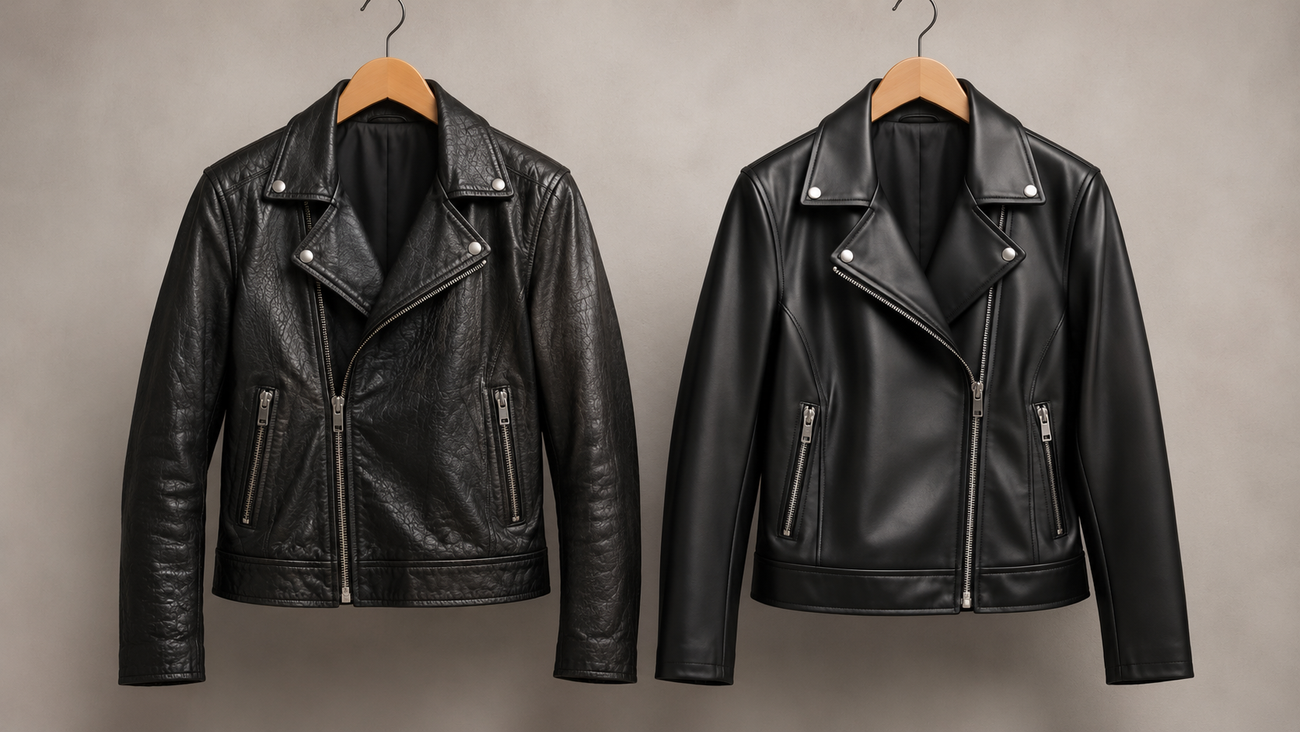
Real leather features natural grain patterns, subtle imperfections and a distinctive texture. As it ages, it can develop attractive creases and a richer finish, giving each jacket its own character.
Faux leather provides a smoother, more consistent appearance. Manufacturers can create glossy, matte or textured finishes in a wide range of colours, making it ideal for trend-focused designs.
High-quality faux leather can look remarkably similar to genuine leather, particularly when new. However, real leather generally offers a more natural feel and develops character with wear.
Which looks better? Real leather is ideal for those who appreciate natural texture and timeless appeal, while faux leather suits shoppers who prefer consistent finishes and versatile fashion choices.
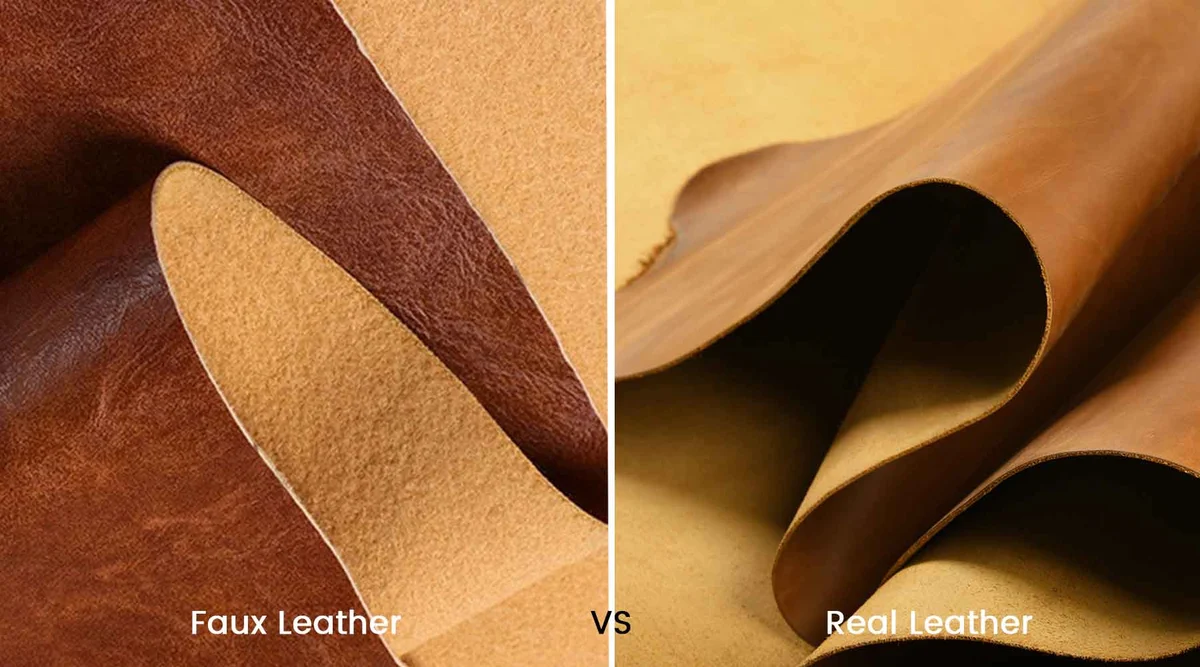
Durability: Which Leather Jacket Lasts Longer?
Durability is an important factor when investing in a leather jacket, particularly if you plan to wear it regularly.
Real leather generally lasts longer because its natural fibre structure provides strength and flexibility. With appropriate cleaning, conditioning and storage, a quality leather jacket can remain wearable for many years.
Faux leather relies on a synthetic surface coating that may gradually weaken through regular movement and exposure to heat. Areas such as elbows, cuffs and shoulders are particularly vulnerable to cracking or peeling.
However, durability also depends on manufacturing quality. A well-constructed faux leather jacket can perform well for occasional or everyday fashion use, while poorly maintained genuine leather can deteriorate prematurely.
If longevity is your priority, real leather is generally the better investment. For occasional wear, seasonal trends or a smaller budget, faux leather can be a suitable alternative.
Comfort and Breathability: Which Is Better?
Comfort matters just as much as style, especially when you plan to wear your leather jacket throughout the day.
Real leather is generally more breathable because of its natural fibre structure, allowing some moisture vapour to pass through the material. It also tends to soften with regular wear, gradually becoming more flexible and comfortable.
Faux leather can feel lightweight and comfortable initially, but synthetic coatings often restrict airflow. This may cause heat and moisture to build up inside the jacket, particularly in warmer conditions.
However, the lining, fit and overall construction also influence comfort.
Which is better? Real leather usually offers better breathability and long-term comfort, while faux leather can be a comfortable option for occasional wear or cooler weather.
Warmth and Weather Resistance: Which Jacket Performs Better?
Both real leather and faux leather jackets can provide protection against wind and chilly weather, but their performance depends on the material, thickness and lining.
Real leather naturally offers some wind resistance, while thicker leather jackets with insulated or shearling linings can provide additional warmth during colder months.
Faux leather also helps block wind, and many synthetic jackets feature warm linings suitable for autumn and winter. However, faux leather itself isn’t necessarily warmer than genuine leather.
When it comes to rain, neither material is completely waterproof unless specifically treated or constructed for that purpose. Real leather can absorb moisture and may become damaged if repeatedly soaked, while faux leather often repels light rain more effectively because of its synthetic coating.
However, prolonged moisture exposure can still damage faux leather coatings, seams and fabric backing.
Which performs better? For everyday winter wear, both can work well. Choose a jacket with suitable insulation and lining rather than relying on the outer material alone.
Real Leather vs Faux Leather: Price Comparison
Price is often one of the biggest deciding factors when choosing between real leather and faux leather jackets.
Real leather jackets generally cost more because of the natural materials, tanning process, craftsmanship and manufacturing requirements. The final price also depends on the type of leather, stitching, hardware and brand.
Faux leather jackets are typically more affordable because synthetic materials can be produced at scale. This makes them attractive to shoppers who want fashionable outerwear without spending as much.
However, the initial price doesn’t always reflect long-term value.
A quality genuine leather jacket may last for years with proper care, potentially reducing the need for frequent replacements. Faux leather offers a lower upfront cost but may need replacing sooner if its coating deteriorates.
Which offers better value? Real leather can be a worthwhile long-term investment, while faux leather is ideal for budget-conscious shoppers or those who frequently update their wardrobe.
Maintenance and Cleaning: Which Is Easier to Care For?
Keeping your jacket in good condition helps maintain its appearance and extend its lifespan.
Real leather requires more attention because it is a natural material. Regular dusting, gentle cleaning and occasional conditioning with leather-appropriate products can help prevent dryness and maintain flexibility.
It’s also important to avoid excessive water, direct heat and prolonged sunlight. When storing a genuine leather jacket, use a suitable hanger and keep it in a cool, dry, ventilated space.
Faux leather is generally easier to maintain. Most jackets can be wiped clean using a soft, damp cloth, making them convenient for everyday use.
However, harsh chemicals, abrasive cleaning products and excessive heat can damage synthetic coatings. Once faux leather begins peeling or cracking, repairs can be difficult.
Which is easier to maintain? Faux leather usually requires less effort, while real leather needs more careful maintenance but can reward that attention with a longer lifespan.
Always follow the specific care label, as cleaning requirements vary between jackets.
Environmental Impact: Is Real or Faux Leather More Sustainable?
Sustainability is becoming an important consideration for shoppers choosing between genuine leather and synthetic alternatives.
Real leather is made from animal hides, often sourced as by-products of the meat industry. Its main environmental concerns include livestock-related emissions, land use, water consumption and chemicals used during tanning.
However, a durable leather jacket that remains wearable for many years may reduce the need for frequent replacements.
Faux leather avoids animal hides, but conventional PU and PVC leather are generally made using fossil fuel-derived plastics. Their production can involve chemical processing, and these materials can contribute to plastic waste when discarded.
Some manufacturers are exploring plant-based and recycled alternatives, although their environmental performance varies depending on their composition and manufacturing methods.
Neither real nor faux leather is automatically the more sustainable choice. Factors such as production methods, material quality, durability and disposal all influence environmental impact.
Which is more sustainable? There is no universal winner. Choosing a well-made jacket, caring for it properly and wearing it for as long as possible can help reduce the environmental impact of either material.
How to Identify Real Leather vs Faux Leather
Real leather and faux leather can look surprisingly similar, especially when you’re shopping online. However, a few simple details can help you identify the material.
Check the texture: Genuine leather often has natural grain variations and subtle imperfections, while faux leather typically features a more uniform pattern.
Feel the material: Real leather usually feels supple and develops flexibility with wear. Faux leather may feel smoother or slightly plastic-like, although premium synthetic materials can be difficult to distinguish by touch.
Examine the edges: Unfinished genuine leather edges may reveal a fibrous structure, whereas faux leather often has a fabric backing beneath its synthetic coating.
Read the product label: The most reliable approach is to check the manufacturer’s material specifications. Look for terms such as genuine leather, lambskin, cowhide, polyurethane (PU) or synthetic leather.
While these checks can provide useful clues, appearance alone cannot always confirm authenticity.
Pros and Cons of Real Leather Jackets
Real leather jackets are popular for their timeless appeal, natural texture and long-lasting quality. However, they also come with certain considerations.
Pros of Real Leather Jackets
- Long-lasting durability: Quality leather can remain wearable for many years with proper care.
- Natural appearance: Unique grain patterns give each jacket a distinctive character.
- Better breathability: Generally allows more moisture vapour to pass through than coated synthetic alternatives.
- Comfort over time: Often becomes softer and more flexible with regular wear.
- Timeless style: Classic leather jackets remain versatile across changing fashion trends.
Cons of Real Leather Jackets
- Higher price: Genuine leather typically costs more than synthetic alternatives.
- Regular maintenance: Requires appropriate cleaning, conditioning and storage.
- Moisture sensitivity: Excessive water exposure can damage untreated leather.
- Animal-derived material: May not suit shoppers who prefer animal-free fashion.
Real leather is an excellent choice for buyers who prioritise durability, natural texture and long-term wardrobe value.
Pros and Cons of Faux Leather Jackets
Faux leather jackets offer an accessible alternative for shoppers who want fashionable outerwear without the higher cost of genuine leather.
Pros of Faux Leather Jackets
- Affordable pricing: Usually costs less than genuine leather.
- Animal-free material: Conventional faux leather does not use animal hides.
- Easy cleaning: Most jackets require only gentle surface cleaning.
- Versatile designs: Available in numerous colours, textures and finishes.
- Consistent appearance: Manufactured surfaces provide a uniform finish.
Cons of Faux Leather Jackets
- Shorter lifespan: Synthetic coatings may deteriorate sooner than quality genuine leather.
- Limited breathability: Can trap heat and moisture during extended wear.
- Peeling and cracking: Some materials develop surface damage over time.
- Difficult repairs: Significant coating damage can be challenging to restore.
Faux leather is a practical option for fashion-conscious shoppers who prefer affordable, animal-free jackets and enjoy experimenting with different styles.
Which Leather Jacket Is Better for Everyday Wear?
If you plan to wear your jacket regularly, comfort, durability and practicality should influence your decision.
Real leather is generally a strong choice for frequent use. It offers natural flexibility, tends to soften over time and can withstand years of wear when properly maintained. A classic leather bomber or biker jacket can also complement casual and smart-casual outfits.
Faux leather is suitable for everyday styling, particularly if you prefer a lightweight, affordable jacket that requires minimal cleaning. However, frequent movement and regular use may eventually affect its synthetic coating.
Your local climate also matters. In warmer conditions, real leather’s relatively better breathability may be beneficial, while either material can work well in cooler weather when paired with a suitable lining.
Which should you choose? For regular, long-term wear, quality real leather generally offers greater durability. Faux leather is a sensible alternative for occasional outings, changing fashion preferences or tighter budgets.
Which Option Is Best for Your Budget and Lifestyle?
The best leather jacket isn’t necessarily the most expensive one. It’s the jacket that matches your lifestyle, preferences and how often you intend to wear it.
If you’re looking for a long-term wardrobe investment, genuine leather may justify its higher initial price. Its durability and timeless appearance make it particularly appealing to shoppers who prefer buying fewer, better-quality pieces.
If you enjoy following seasonal trends or experimenting with different colours and styles, faux leather provides greater flexibility at a lower upfront cost.
Your personal priorities are equally important. Some buyers value natural materials and longevity, while others prefer animal-free alternatives and simpler maintenance.
Consider these factors before buying:
- Budget: Decide how much you’re comfortable spending.
- Frequency of use: Consider whether the jacket will be worn daily or occasionally.
- Personal style: Choose a design that complements your existing wardrobe.
- Maintenance: Think about how much time you’re willing to spend caring for the material.
- Material preferences: Consider durability, comfort and animal-free options.
Ultimately, the right jacket should feel comfortable, suit your wardrobe and offer value based on your individual needs.
Where to Buy Quality Real and Faux Leather Jackets
Finding the right retailer is just as important as choosing the material. A quality leather jacket should offer a comfortable fit, reliable stitching, suitable lining and durable hardware.
When shopping online, look for clear material descriptions, detailed product photographs, accurate sizing information and transparent return policies. These details help you make a more informed decision.
At American Leather House, shoppers can explore a variety of leather jacket styles, including classic biker jackets, bomber jackets and contemporary outerwear designs.
Whether you’re interested in genuine leather or a more affordable faux leather alternative, focus on selecting a jacket that suits your style, comfort requirements and budget.
Before purchasing, check the individual product’s material specifications and sizing details to ensure you’re choosing the right option.
Final Verdict: Should You Choose Real or Faux Leather?
So, when comparing real leather vs faux leather jackets, which one should you buy?
The answer depends on what matters most to you.
Real leather is generally the better choice if you value long-term durability, natural texture, breathability and a jacket that develops character with age. Although it requires more care and a higher initial investment, quality genuine leather can remain a wardrobe favourite for years.
Faux leather, on the other hand, is ideal for shoppers who prioritise affordability, animal-free materials, easy cleaning and fashionable designs. While it may not offer the same longevity, it can still deliver excellent style and practicality.
Neither material is perfect for everyone. The best decision comes down to your budget, lifestyle and personal preferences.
Explore the collection at American Leather House and find a jacket that combines the style, comfort and quality you’re looking for.